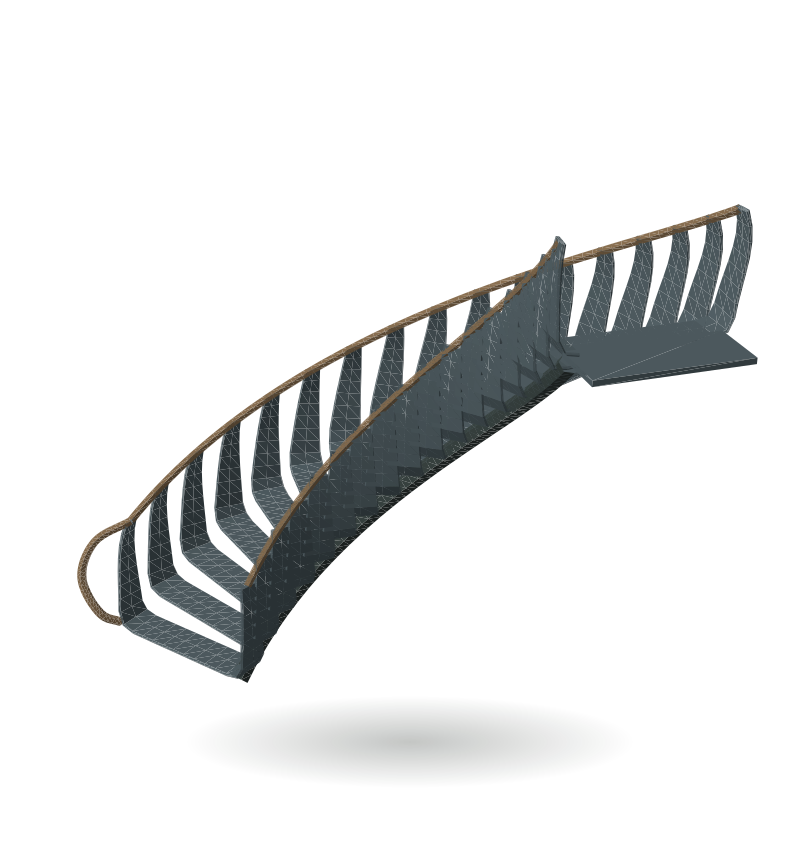
Study of the physical model
Thinking through form at a small scale.
The physical model brings together the helical form and the branching pattern. Its openings reveal the relationship between surface and open space.


First, the idea.
Then, the material.
The model and photographs of the making process.
Explore the work↓The Ginko model explores a helical staircase with a branching design. Archive photographs also show the metal being worked: the pattern is drawn, cut and brought onto the curved surface.
Model and making documentation from the archive.The model’s motif finds another expression in the worked metal.
The model detail highlights the branching motif.
Original photograph
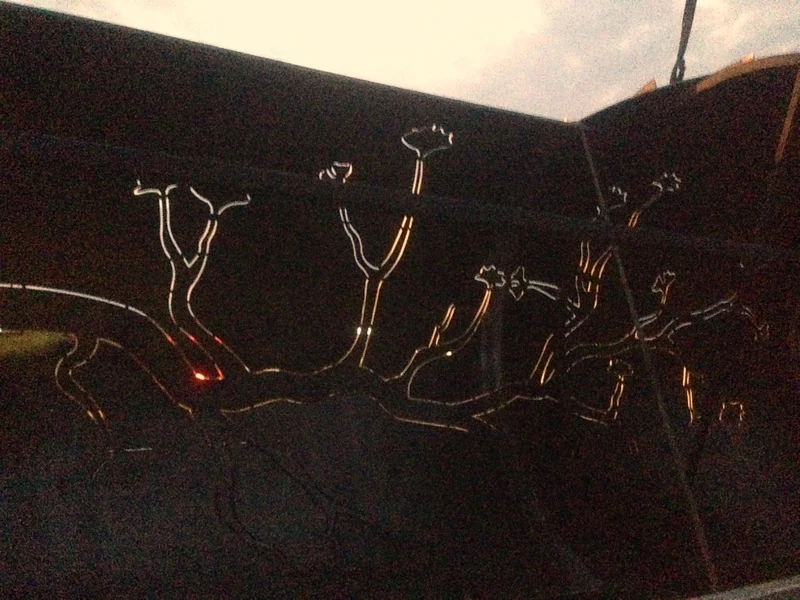
The traced design and openings cut into the metal surface.
Original photographThe photographs document the metal’s journey through the workshop. The worked surface takes on the curvature defined by the design.
Scroll through the story
Study of the physical model
The physical model brings together the helical form and the branching pattern. Its openings reveal the relationship between surface and open space.
Workshop documentation
The workshop photograph shows the pattern transferred onto the metal surface. Marks and openings reveal the work on the material.

Fabrication / original photograph
The sheet takes on a curved form. In this workshop photograph, the branching pattern follows the metal as the design acquires volume.

Original photographs from the archive. Open them to explore every detail.
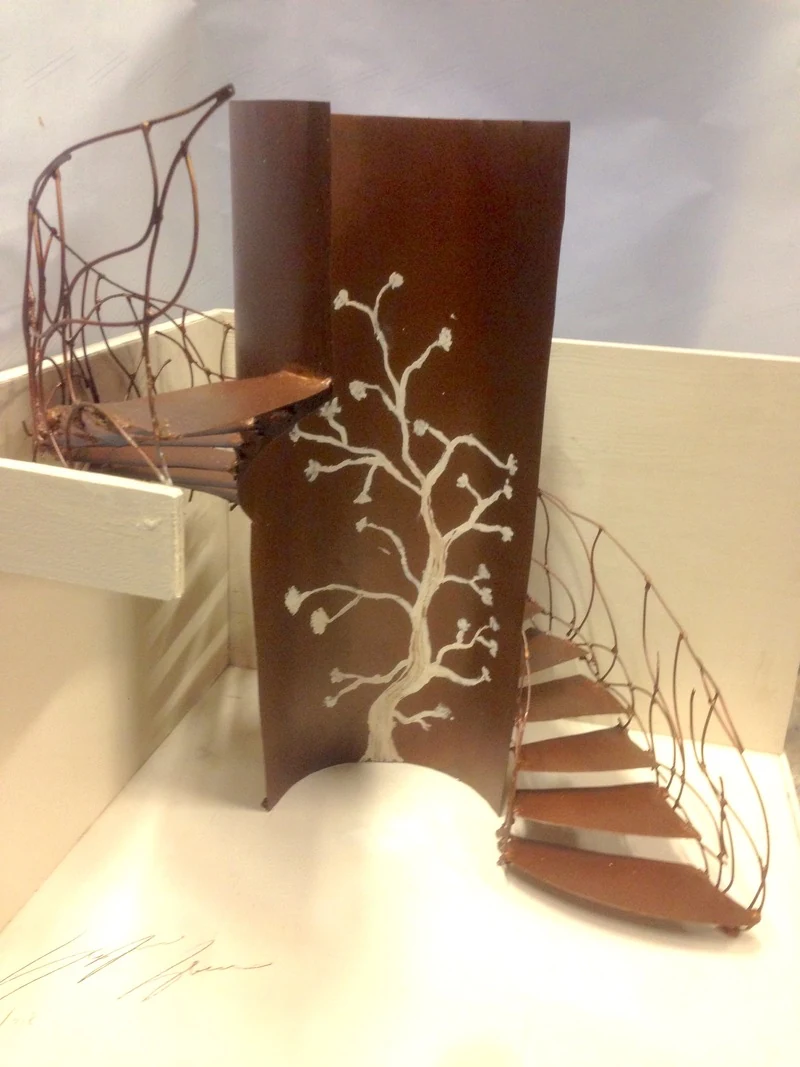
The physical model of the Ginko helical staircase.
Ginko’s curved surface during fabrication.
The worked metal and branching pattern in the workshop.

The curved metal structure during fabrication.

An idea, a place, a way of living.
Tell Simone what you have in mind.
The first sketch can begin here.